THE LIFE AND LEGACY OF ST. ALBERT THE GREAT: PATRON SAINT OF OUR SEMINARY
 INTRODUCTION
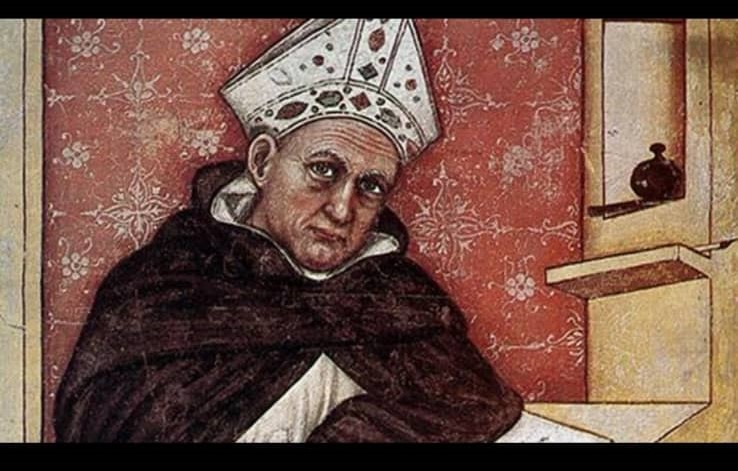
St. Albert the Great, also known as Albertus Magnus, stands as one of the most illustrious figures in the history of the Catholic Church, renowned for his profound intellect, unwavering faith, and groundbreaking contributions to philosophy, theology, and the natural sciences. Born around 1200 in Lauingen, Swabia (now part of modern-day Bavaria, Germany), Albert was the eldest son of a noble family, likely the Count of Bollstädt, a knightly lineage in service to the emperor. His early life was marked by the privileges of his social standing, yet from a young age, he exhibited a keen curiosity about the world, foreshadowing his future as the "Doctor Universalis" – the Universal Doctor – a title bestowed upon him for his encyclopedic knowledge.
EARLY EDUCATION AND CALL TO RELIGIOUS LIFE
Albert's formal education began in his youth, though details of his initial schooling remain somewhat obscure. It is believed he received instruction at home or in local monastic schools before pursuing higher studies at the University of Padua in Italy, a center of learning renowned for its liberal arts curriculum. There, he immersed himself in the works of Aristotle, which were becoming increasingly available through translations from Arabic sources. This exposure to Aristotelian philosophy would profoundly shape his intellectual pursuits.
A fundamental moment in Albert's life occurred around 1223, when he encountered the preaching of Blessed Jordan of Saxony, the second Master General of the Dominican Order. Inspired by Jordan's eloquence and the Dominican emphasis on study and preaching, Albert decided to join the Order of Preachers (Dominicans), despite familial opposition – a common hurdle for noble entrants into mendicant orders.
Legend holds that an apparition of the Blessed Virgin Mary encouraged him in this decision, urging him to dedicate his life to God. He entered as a novice, possibly in Padua or Bologna, and completed his theological studies in various Dominican houses, including Bologna.
TEACHING AND ACADEMIC CAREER
Upon completing his novitiate, Albert quickly rose through the ranks due to his scholarly prowess. He began lecturing on theology in Dominican convents across Germany, including Hildesheim, Freiburg-im-Breisgau, Regensburg (Ratisbon), Strasbourg, and Cologne. By 1245, he was summoned to the University of Paris, the intellectual hub of Europe, where he earned his doctorate in theology and held the prestigious Chair of Theology at the College of St. James. It was here that he first encountered a young Thomas Aquinas, whom he recognized as a prodigy. Albert famously defended Aquinas from mocking classmates who called him the "Dumb Ox," prophesying that "this ox will one day fill the world with his bellowing."
In 1248, Albert returned to Cologne to establish a new Studium Generale (general house of studies) for the Dominicans, with Aquinas as his assistant. As Regent of Studies, Albert shaped the curriculum, emphasizing the integration of philosophy and theology. In 1250, at the General Chapter in Valenciennes, he collaborated with Aquinas and Peter of Tarentasia (future Pope Innocent V) to formalize Dominican educational standards, including rules for examinations and graduations. This period solidified his role as a master educator, influencing generations of scholars.
ECCLESIASTICAL LEADERSHIP AND APOSTOLIC DUTIES
Albert's talents extended beyond academia. In 1254, he was elected Provincial of the Dominican Province of Teutonia (Germany), a vast region encompassing numerous convents. During his tenure, he visited houses on foot, embodying Dominican humility, and defended the mendicant orders against secular clergy attacks, notably those led by William of St. Amour.
In 1256, while in Rome, he successfully advocated for the orders before Pope Alexander IV, resulting in the condemnation of William's writings. Relieved of his provincial duties in 1257, Albert briefly served as Master of the Sacred Palace (the papal theologian). However, in 1260, Pope Alexander IV appointed him Bishop of Regensburg, a diocese plagued by financial and administrative woes.
Despite his reluctance, Albert accepted and reformed the see with zeal, traveling humbly and restoring order. He resigned in 1262, citing a desire to return to teaching, and was relieved by Pope Urban IV in 1263. Thereafter, he preached the Eighth Crusade in German lands and mediated disputes, such as the 1258 conflict between Cologne's citizens and archbishop.
CONTRIBUTIONS TO PHILOSOPHY AND SCIENCE
Albert's intellectual legacy is perhaps most profound in his synthesis of faith and reason. He was the first medieval scholar to comment extensively on Aristotle's entire corpus, making it accessible in Latin while purifying it of errors incompatible with Christianity, such as Averroism (which posited a single intellect for all humanity). Influenced by Neoplatonism from sources like Pseudo-Dionysius and the Liber de Causis, he structured reality around the emanation from God (exitus), its unfolding (perfectio), and return (reductio).
In metaphysics, he viewed being as created and abstracted from matter, with God as the uncomposed First Cause. As a pioneer in empirical science, Albert underlined experimentation: "Experimentum solum certificat in talibus" (experiment alone confirms in such matters).
His works on natural philosophy covered physics, astronomy, mineralogy, chemistry, botany, zoology, and physiology. In De Mineralibus, he advanced mineral classification; in De Vegetabilibus et Plantis, he described plant structures; and in De Animalibus (a 26-book treatise), he incorporated observations from dissections and travels. He argued for the Earth's sphericity, speculated on celestial influences (while critiquing astrology's excesses), and experimented with photosensitive substances like silver nitrate. Albert's approach reconciled Aristotelian naturalism with Christian creationism, asserting that philosophy illuminates faith without contradicting it.
In ethics, drawing from Aristotle's Nicomachean Ethics, he discussed virtues, friendship, and natural law, viewing justice as rooted in God and friendship as a virtue fostering harmony. His political thought emphasized communal good through contemplation.
THEOLOGICAL WORKS AND DEFENSE OF ORTHODOXY
Albert's theological output was vast. His commentary on Peter Lombard's Sentences spanned 25-30 volumes, while his Summa Theologiae (unfinished) systematically treated doctrines, bridging Lombard and Aquinas. Other key works include Summa de Creaturis, commentaries on Dionysius the Areopagite, the Psalms, Prophets, Gospels, and Apocalypse, and treatises like De Sacramento Eucharistiae. He defended orthodoxy vigorously, writing De Unitate Intellectus Contra Averroem in 1256 and aiding Aquinas against Siger de Brabant in 1270.
LATER LIFE, DEATH, AND CANONIZATION
In his later years, Albert attended the Second Council of Lyons in 1274, summoned by Pope Gregory X, where he advocated for Christian unity. The death of Aquinas en route to the council in 1274 deeply affected him; he mourned his pupil as the "flower and glory of the world." In 1277, despite failing health, he traveled to Paris to defend Aquinas's writings against condemnation.
By 1278, Albert's memory began to fade due to age and rigorous life. He died peacefully on November 15, 1280, in the Dominican convent in Cologne, surrounded by his brethren. His body was interred in St. Andrew's Church, Cologne, where relics remain today. Beatified by Pope Gregory XV in 1622, Albert was canonized and declared a Doctor of the Church by Pope Pius XI on December 16, 1931, recognizing his enduring contributions. His feast day is celebrated on November 15, which is specially celebrated as in our Seminary.
SIGNIFICANCE AND CONCLUSION
As Patron Saint of our Seminary, St. Albert exemplifies the harmony between faith and reason, inspiring seminarians to pursue intellectual rigor in service to the Gospel. Declared patron of natural scientists in 1941, he also protects philosophers, medical technicians, and those in education. His legacy influenced not only Aquinas but also later scholastics, shaping medieval thought and paving the way for the Scientific Revolution. Albert's life reminds us that true wisdom seeks God in all creation, blending contemplation with action for the greater glory of the Church.
Paul Oluwafemi OGUNTEGBE